

Hashnote Investor Portal
Designed the end-to-end investor experience for a regulated digital asset manager —
onboarding, funding, portfolio management, and a separate product portal for institutional clients.
CompanyFintech startup
5-person team
My RoleSolo designer
TimelineMarch 2023 ~ September 2024
Overview
Context and Initial Ask
Hashnote is a regulated asset manager offering institutional investors access to digital and real-world asset strategies through blockchain-based smart contract technology. I was brought in to polish the existing portal and marketing proposals while the team developed new products.
The real scope emerged quickly: client onboarding was a 4-week manual process built around 80~120 page application bundles, repeated follow-ups, and no clear KYC/AML path. The portal needed to do much more.
The Problem, In Concrete Terms
Each client's application was custom-built and sent alongside portal credentials before clients had context for what they were signing. Drop-off was high, follow-ups were constant, and the team was spending weeks per client. Document handling, signing, and KYC routing all happened through external tools, reflecting limited development capacity at the time.
Before redesigning the flow, I mapped every variable affecting a client's path: client type, jurisdiction, fund selection, KYC requirements, and funding method. What became clear was that the complexity wasn't purely a UX problem — KYC handoff procedures, client communication at decision points, and funding instructions all lacked documented processes. Designing the flow meant resolving these questions alongside the interface work.
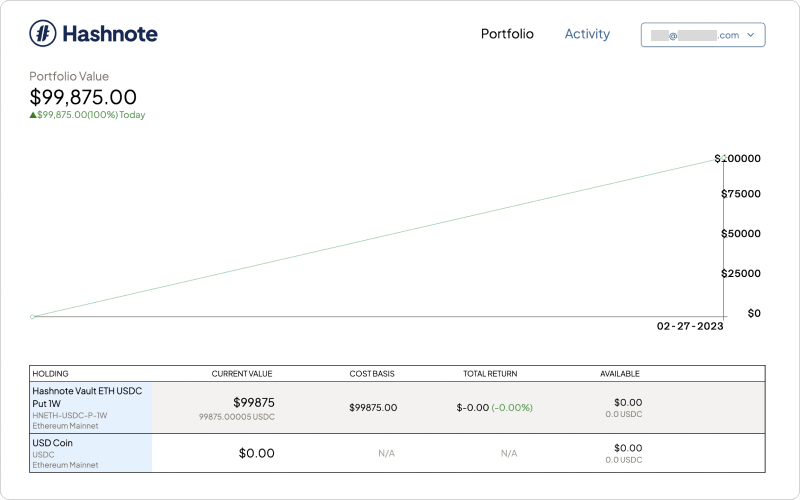
Early Account Dashboard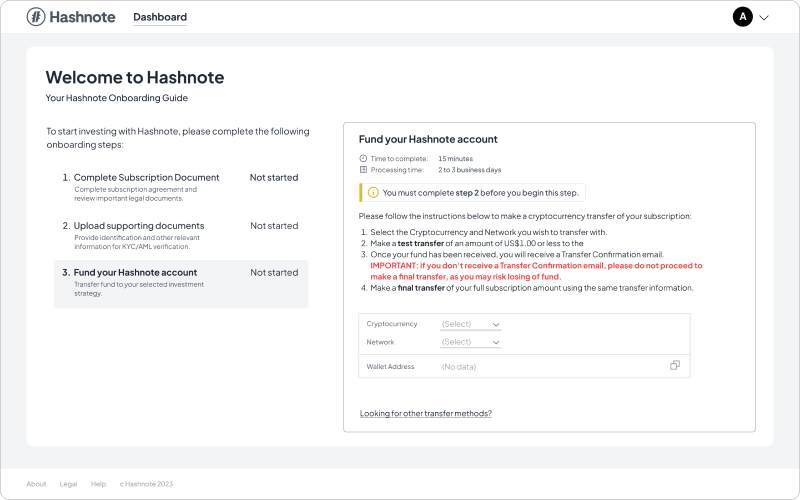
Early Onboarding Info Center
Early Onboarding Flow DiagramRed annotations mark points of friction across the onboarding process: unclear field validation before submission, undocumented KYC/AML handoff procedures, no standardized client communication at decision points, and unresolved funding instructions by transfer method and client type.
Redesign Onboarding Flow
Key Decisions
#1
Unify initial sign-up step for all clients
Previously, known clients were onboarded through a separate manual path. Standardizing the process so all clients go through the same portal sign-up removed ambiguity, reduced coordination overhead, and made the system scalable as the client base grew.
#2
Show the application before approval
Rather than gating the questionnaire behind a pre-screened invite, we made it accessible to anyone who created a portal account. This gave the team visibility into prospective clients outside their existing network and surfaced demand they wouldn't otherwise have seen.
#3
Gate legal documents until approval
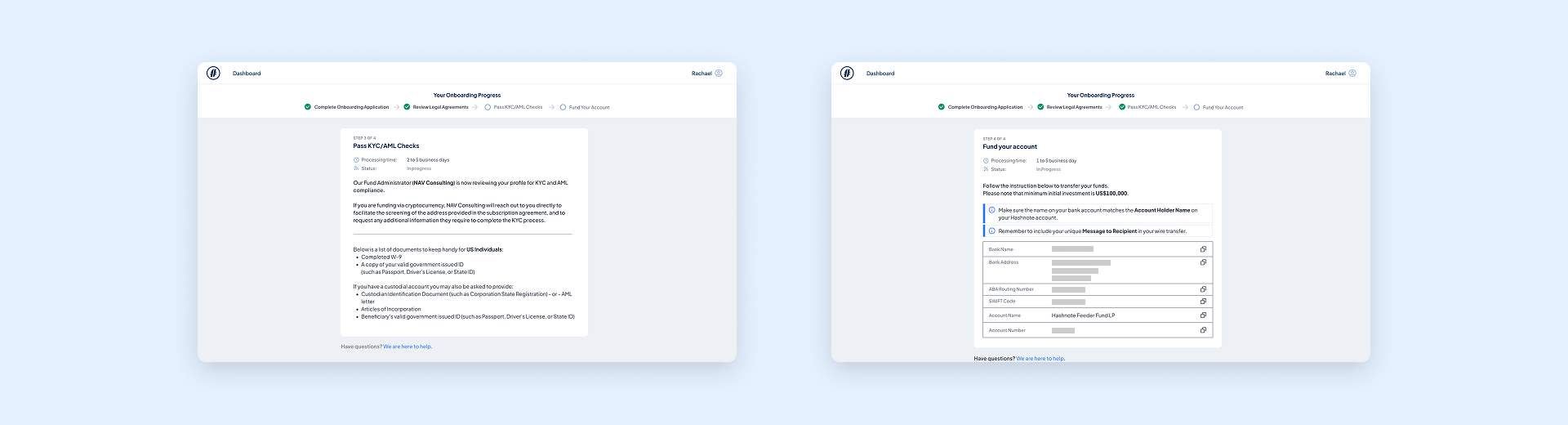
Full legal documents and subscription agreements were only unlocked after the questionnaire was reviewed and approved internally, protecting proprietary fund structure information. Clients could track their progress and return to completed steps at any point.

Revised Onboarding Flow Diagram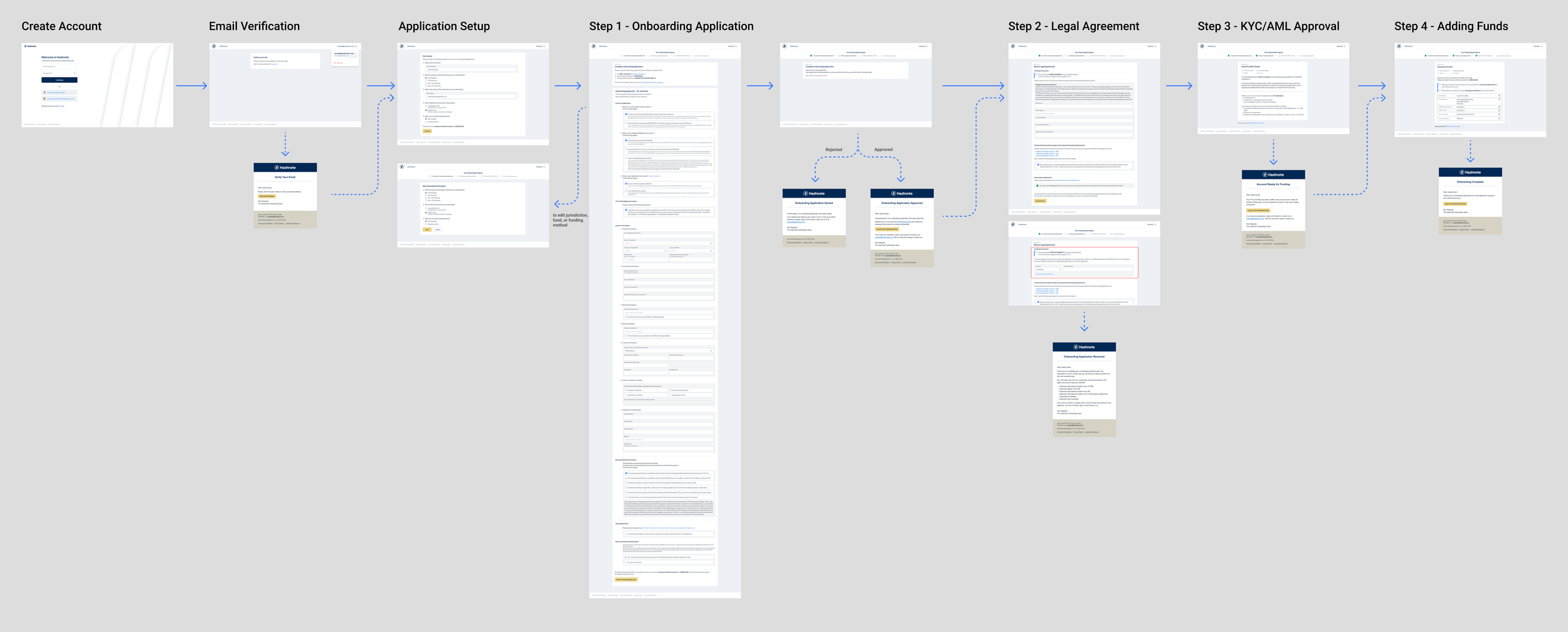
Screens-to-Step DiagramFinal Product
Onboarding
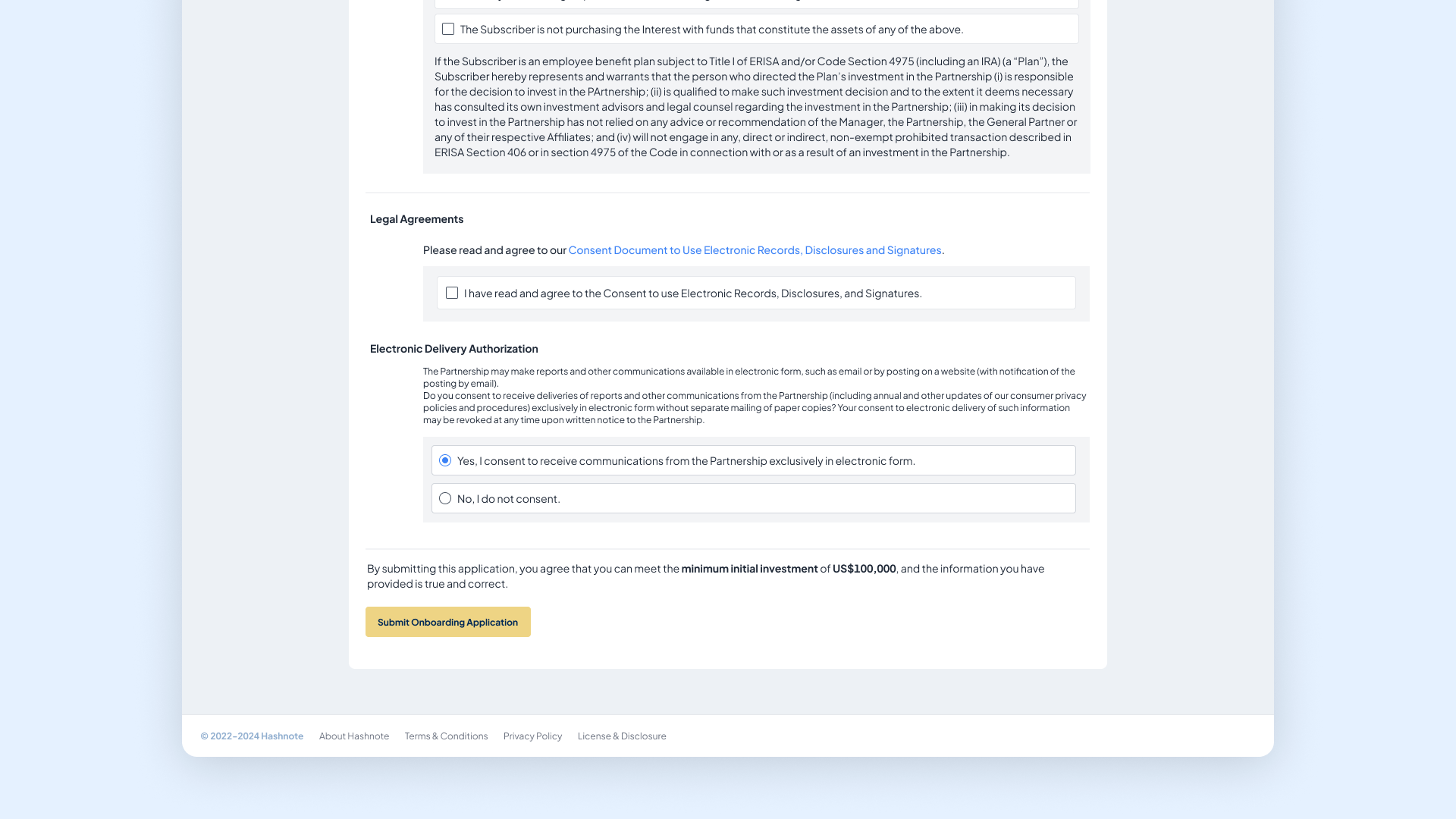
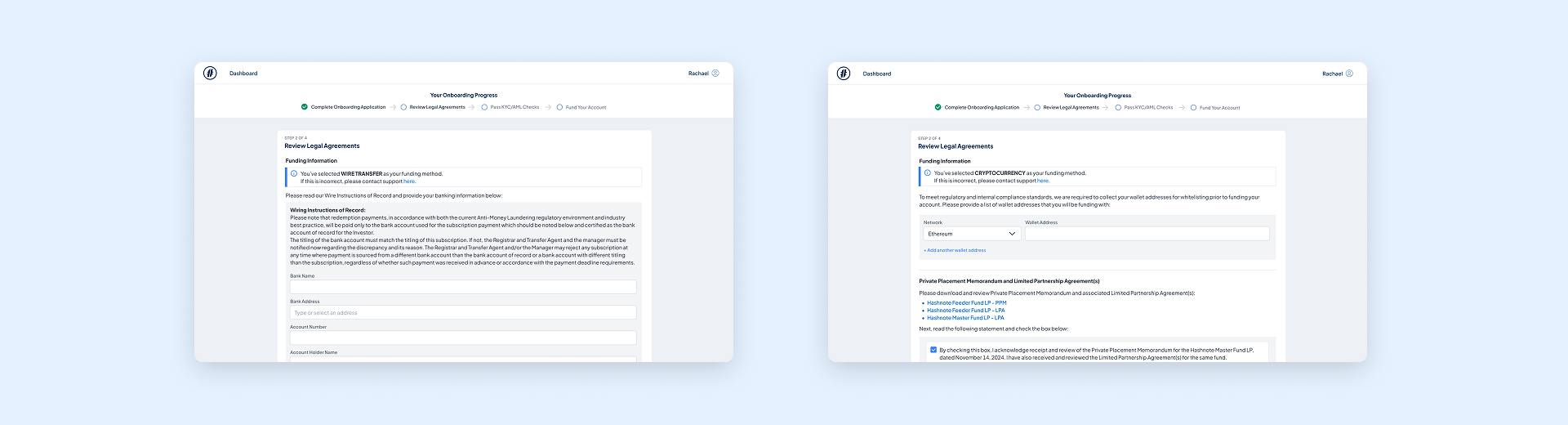
The portal has a streamlined application with four distinct stages, branching by client type and jurisdiction, with gated document access and saved progress across sessions.
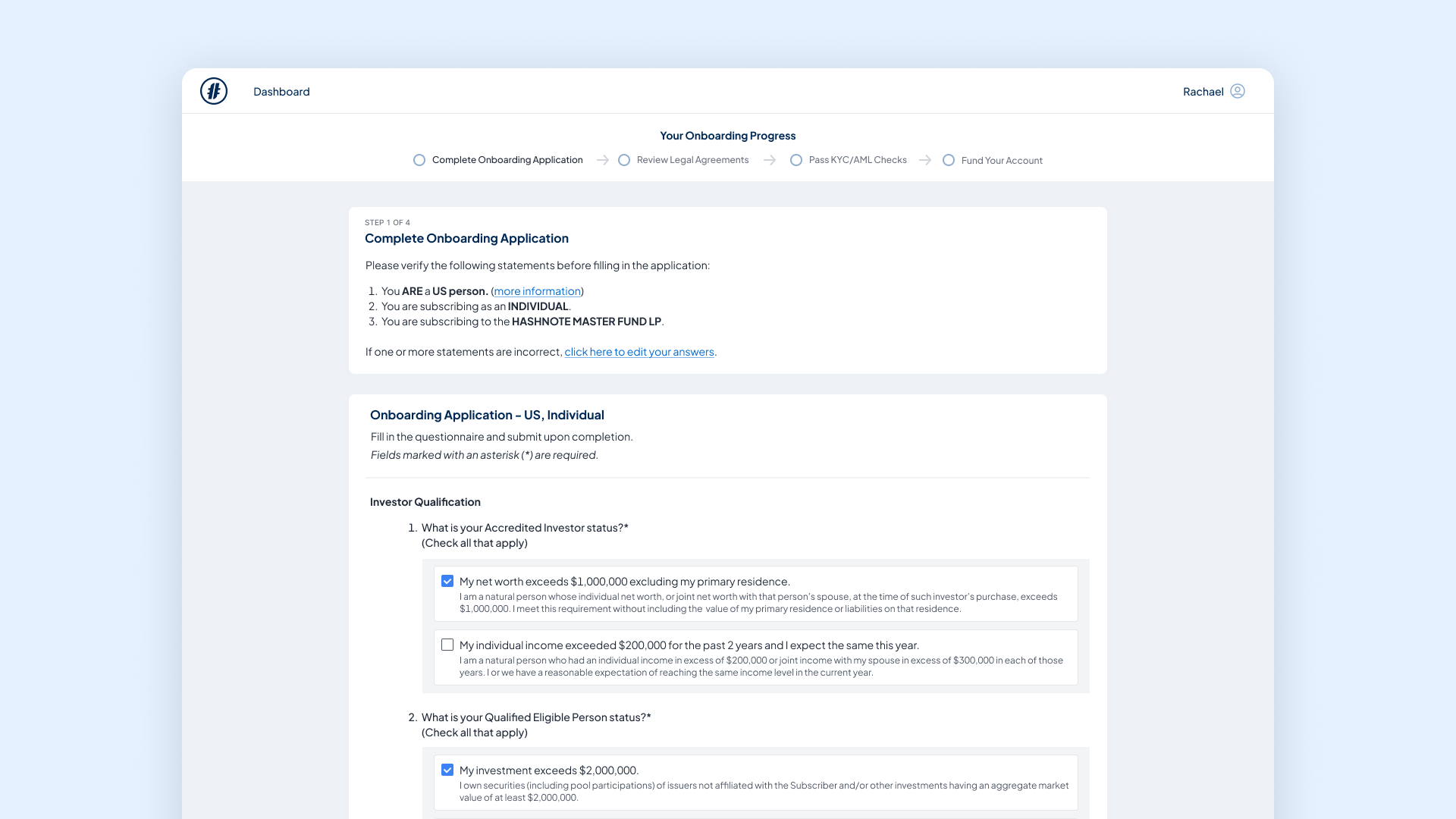
Dashboard
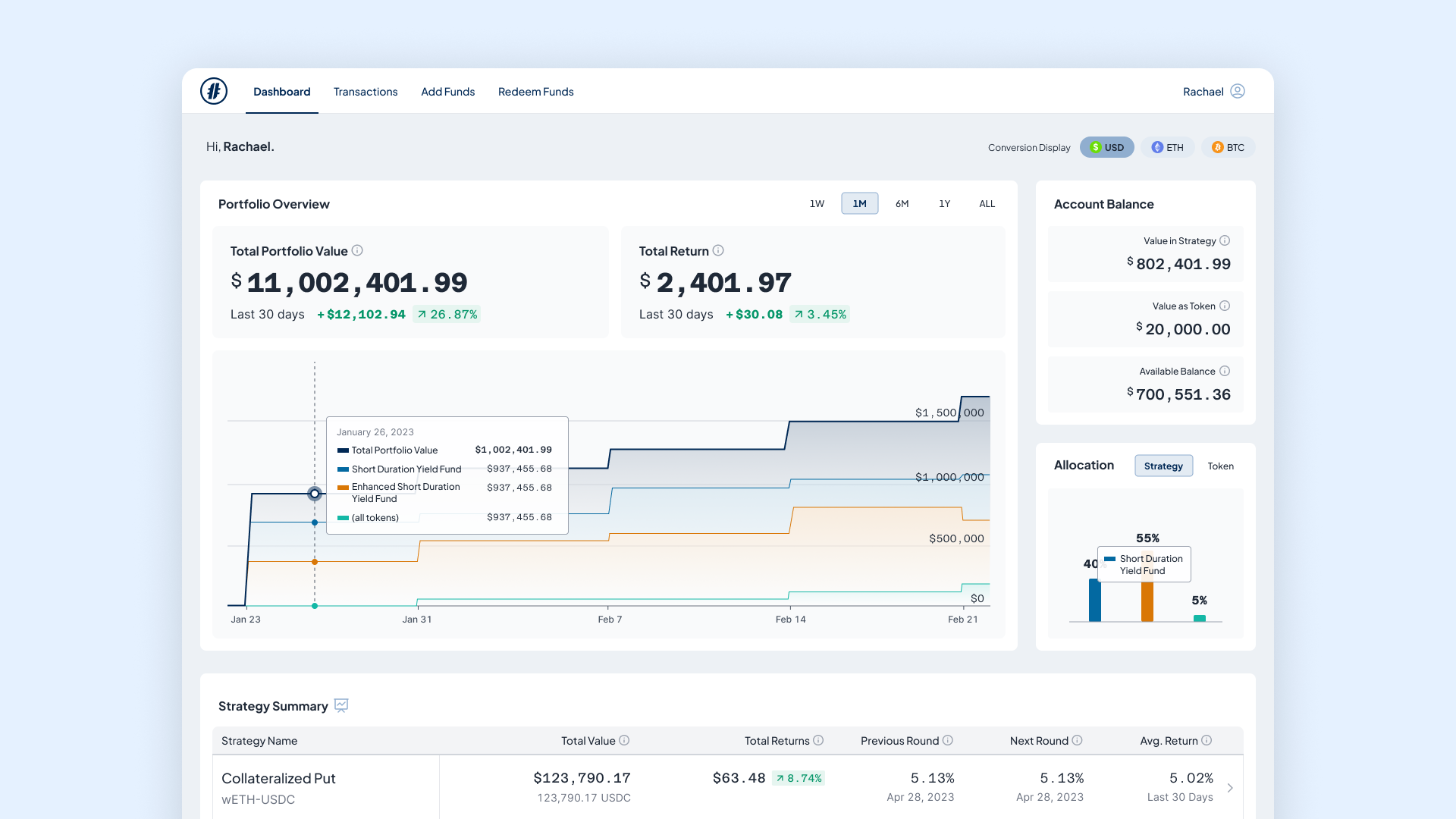
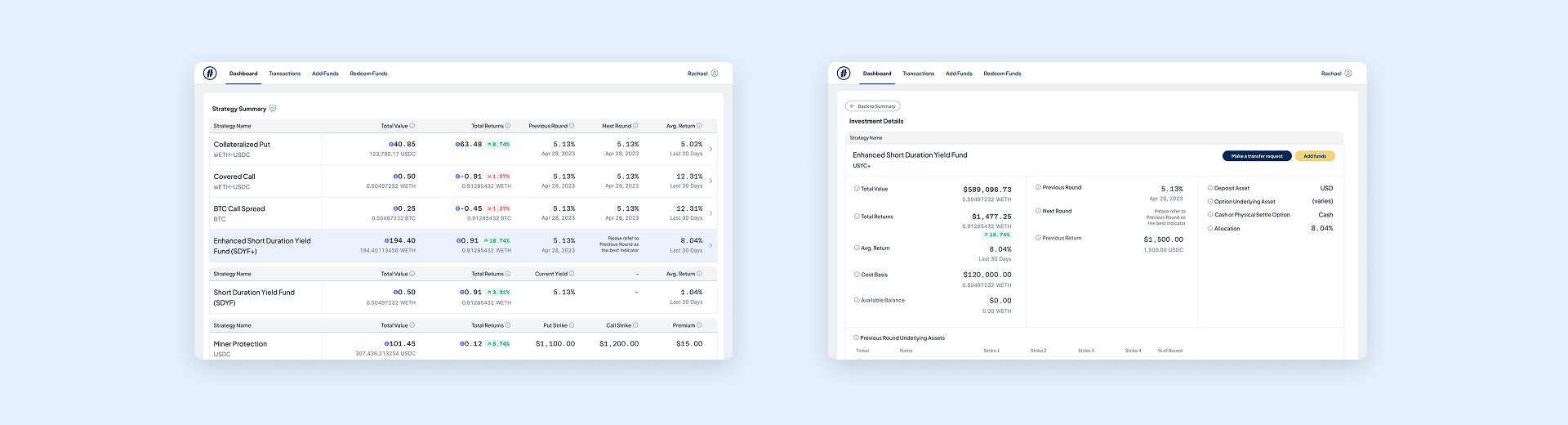
Because investors rely on current data to make time-sensitive decisions, the portal needed to display real-time positions for each investment product.
Funding and Transactions
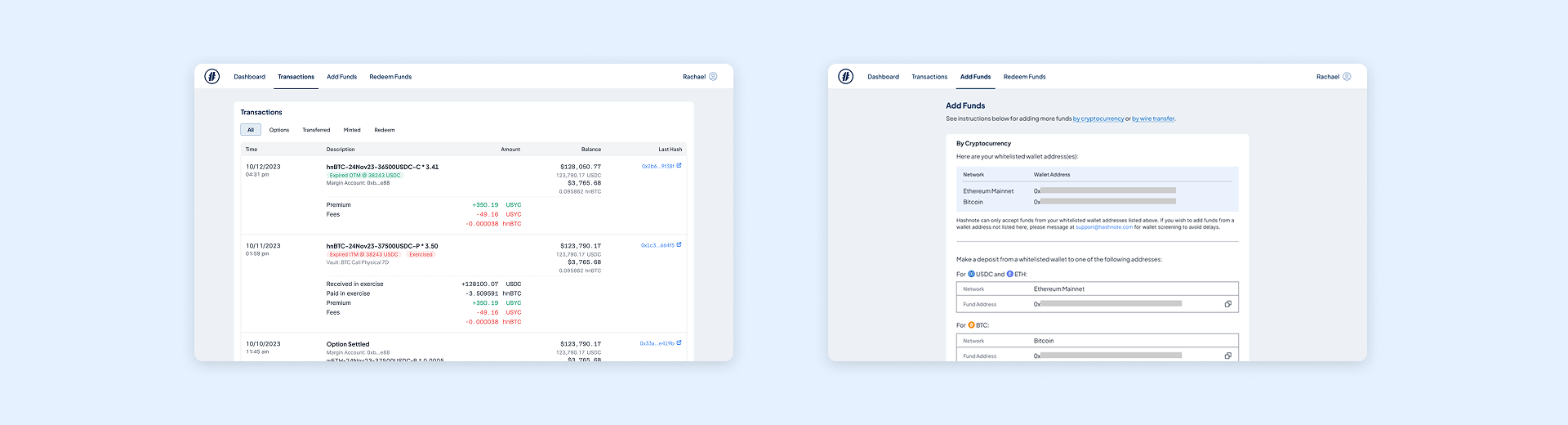
Beyond portfolio display, the portal supports fund management and transaction history. The screens are intentionally dense because our clients are institutional investors who expect full information upfront. The design priority is clear, ordered presentation rather than the simplified step-by-step flows common in retail products.
Impact
Once onboarding was streamlined, average completion time dropped from 4 weeks to 3–7 business days, sometimes with accounts fully funded at completion.
Extended Products
USYC Portal
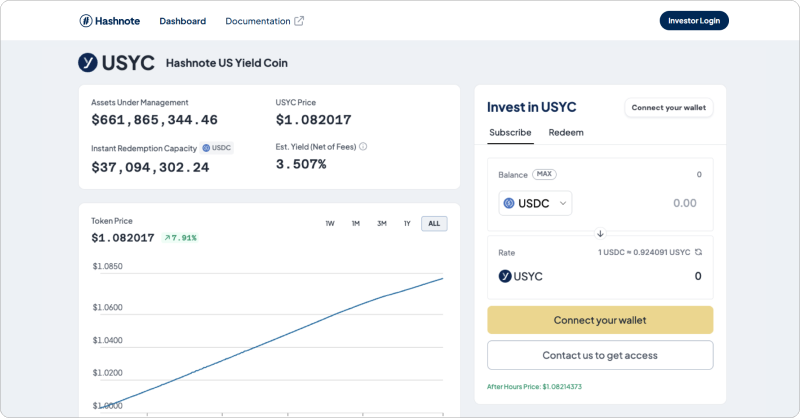
The team later requested a separate interface for visitors to view USYC product information and for clients to connect their crypto wallets and manage their balance. The engineering team implemented the underlying wallet infrastructure, and my role was designing a clear, self-serve funding and redemption interface within those technical constraints.
Marketing Website
Reflection
The biggest challenge wasn't the UI: it was developing enough understanding of crypto, fund structure, and regulatory requirements to make good decisions independently. Building the product catalog directly with the founder gave me the domain context I needed to design with confidence.
In hindsight, integrating in-app forms and untangling the legal requirements also helped the team track leads more clearly and understand how the products differentiated Hashnote in the market — outcomes that went beyond the original brief.
If I were to revisit this project, I'd push earlier for usability testing with actual clients rather than relying on internal feedback alone.